CGHE and OVPR Co-Fund Community-Led Violence Prevention in Malawi

The sports coach. The youth club leader. The child protection officer down the road. In communities across Malawi, these are the adults young people already know and trust. A new University of Michigan study asks whether they can also deliver one of the most rigorously tested sexual violence prevention programs in sub-Saharan Africa.
The project, led by Joseph Gardella, PhD, an assistant research scientist at the U-M School of Social Work, is one of nine projects selected for funding through Building Better Futures, an internal research competition from the Office of the Vice President for Research (OVPR). The Center for Global Health Equity (CGHE) is co-funding the $100,000 award, covering half the cost.
The study centers on IMpower, a prevention system that pairs Empowerment Self-Defense for girls with Your Moment of Truth, a program for boys focused on healthy relationships, gender-equitable attitudes and stepping in when they see harm. Across multiple randomized controlled trials, IMpower has reduced sexual violence, and it has reached more than 5 million young people in Kenya and Malawi. Most of that reach has come through schools, with lessons led by dedicated, full-time facilitators.
That model works, but it leaves out many young people. In Malawi, about one in five people ages 10 to 19 are not in school, including nearly 40% of those ages 15 to 19.
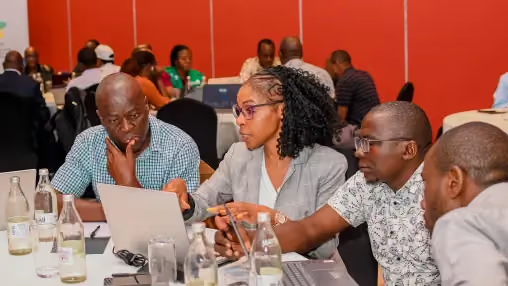
The Salama Initiative, U-M's longtime implementation partner, designed the Community Champion model to close that gap. Rather than building a new workforce, it trains people already working with adolescents, including teachers, sports coaches, community health workers, social welfare officers and leaders of mothers' groups. Champions complete 120 hours of training before they are certified to deliver the six-session IMpower curriculum in youth clubs, sports programs, faith-based organizations, after-school programs and other places young people already go. Salama master trainers provide ongoing mentorship and quality checks, and standout Champions can go on to train others.
The model is promising, but it has never been rigorously evaluated. Over 18 months, the team will work in one urban and one rural district in Malawi with about 200 young people (100 girls and 100 boys), 25 to 30 Community Champions and 20 government and community stakeholders. Youth will complete surveys before and after the program, and the team will track how closely Champions follow the curriculum, who they reach and how many young people stay engaged. Interviews and focus groups will capture what helps or gets in the way, from supervision to community ownership.
The partnership divides the work by strength. Salama leads community engagement, recruitment, Champion training, program delivery and sharing results in Malawi. U-M investigators lead study design, measurement and analysis. A Malawi community advisory board of youth, community leaders, government representatives and implementation partners will guide the project throughout.
Gardella's co-principal investigator is Katie M. Edwards, PhD, professor of social work, whose partnership with Salama leadership spans years of IMpower research. The team also includes Michelle Munro-Kramer, PhD, associate professor and director of global programs at the School of Nursing; Bret Hanlon, PhD, associate professor of biostatistics at the School of Public Health; and Salama's Executive Director Benjamin Omondi and Martin Ndirangu.
Other projects in this year's Building Better Futures cohort range from a partnership with the Sault Tribe of Chippewa Indians on large carnivore recovery to an agent-assisted mobile audiology clinic for low-resource settings.
The project runs through March 2028. The team plans to use its findings to refine the Community Champion model and to compete for larger implementation trials, with an eye toward scale-up in countries such as Zambia and Zimbabwe. If trusted adults in a community can carry proven prevention, it can reach the young people who need it most, wherever they are.